
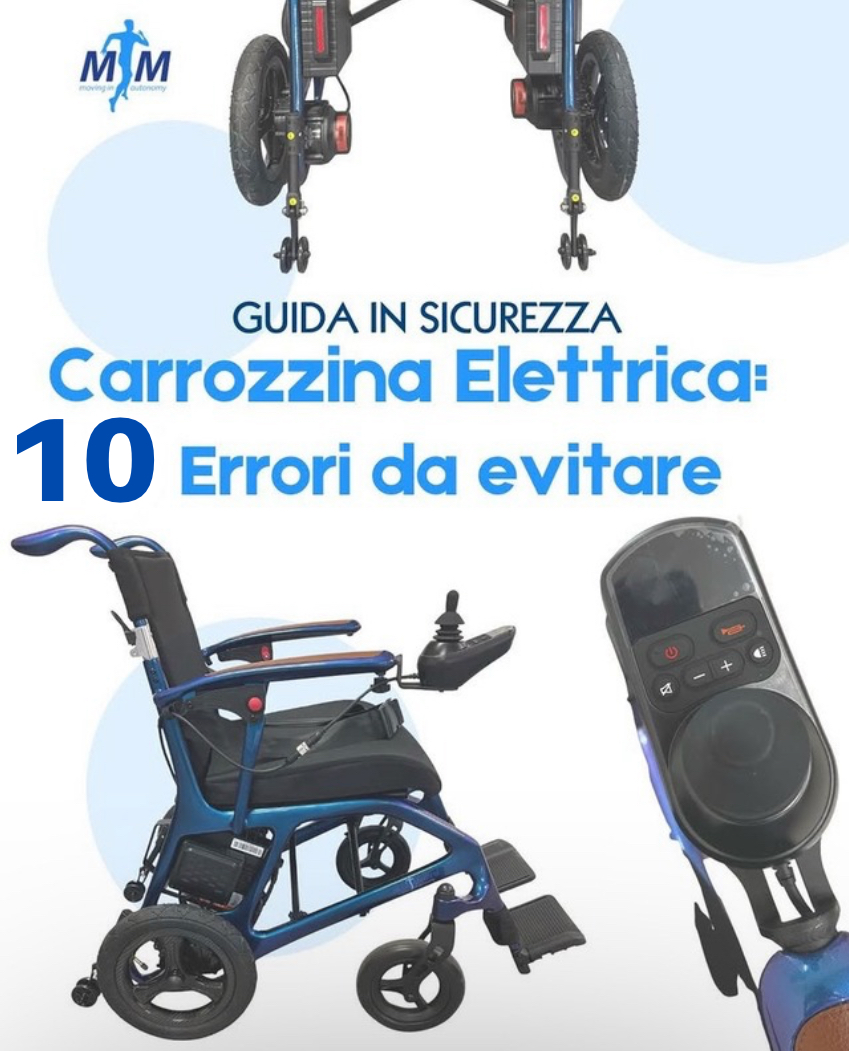
10 Mistakes to Avoid When Using an Electric Wheelchair: A Safety Guide
Introduce a electric wheelchair In one’s daily routine, this can mark an extraordinary turning point for the freedom and independence of seniors and people with reduced mobility.However, as these are motorised electronic devices, there may be some common mistakes in use, manoeuvre e maintenance which may compromise the integrity of the vehicle or, worse still, the user’s health.
For this reason, the team at M.I.A. Medical decided to create this guide detailed information on the errors the most common ones to avoid and the golden rules to follow to ensure a smooth user experience and a long service life for your electric wheelchair.
Mistakes to Avoid During the Transfer and Initial Set-up of an Electric Wheelchair
1. Get on or off the electric wheelchair whilst the control unit is switched on
-
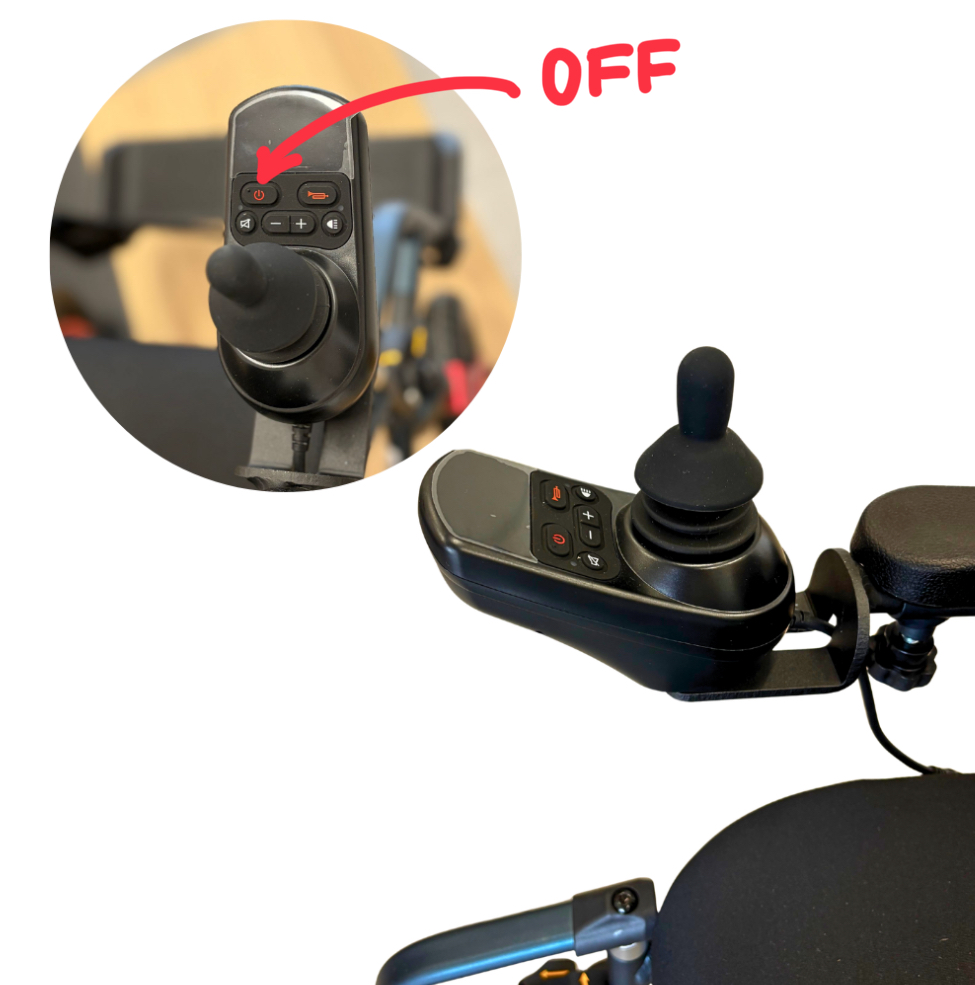
The mistake: Many users sit down or stand up whilst the joystick is still active. However, when the body moves, even the slightest accidental bump to the control unit could cause the wheelchair to move suddenly, leading to serious falls or collisions with walls and furniture.
-
The rule to follow: Always switch off the control unit before getting on or off the vehicle.
2. Use the footrests on the electric wheelchair as a step to help you get in
-
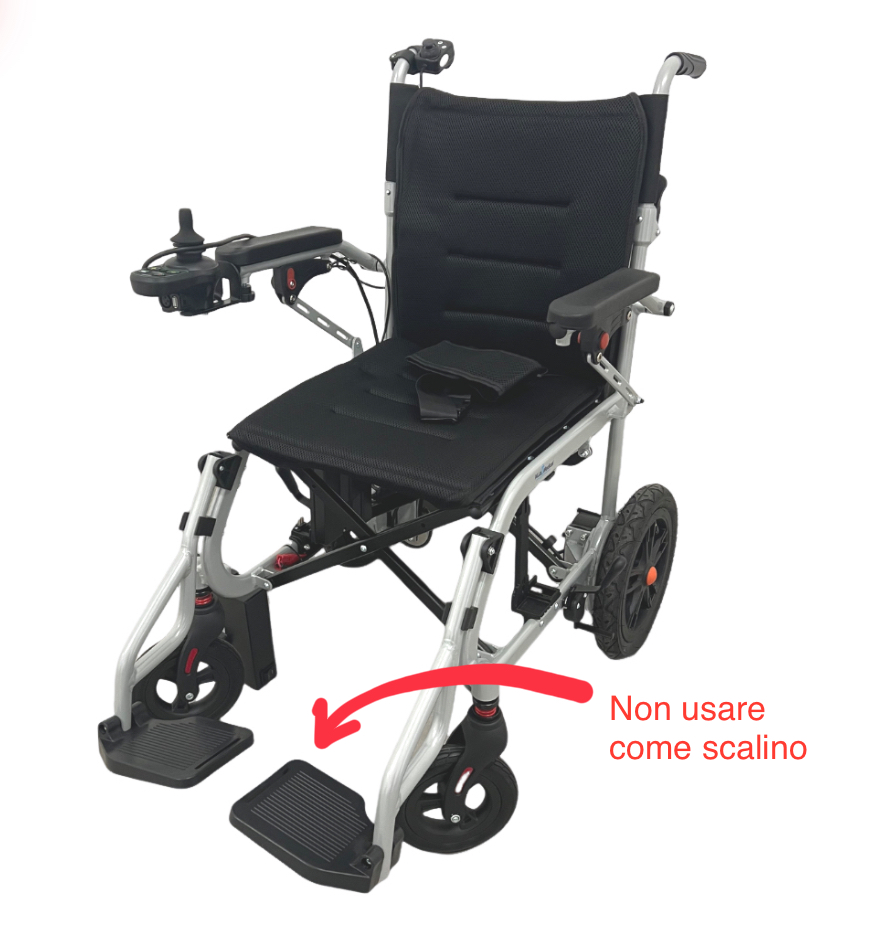
The mistake: Push down on the front footrests with your full body weight to propel yourself forward and sit down on the cushion. This action instantly alters the wheelchair’s centre of gravity, risking the wheelchair tipping forwards or causing irreparable damage to the structural supports of the footrests themselves.
- The rule to follow: Tilt the footrests upwards, sit firmly on the cushion and only then lower the footrests again to position your feet.
3. Engage “Freewheel” mode when going downhill
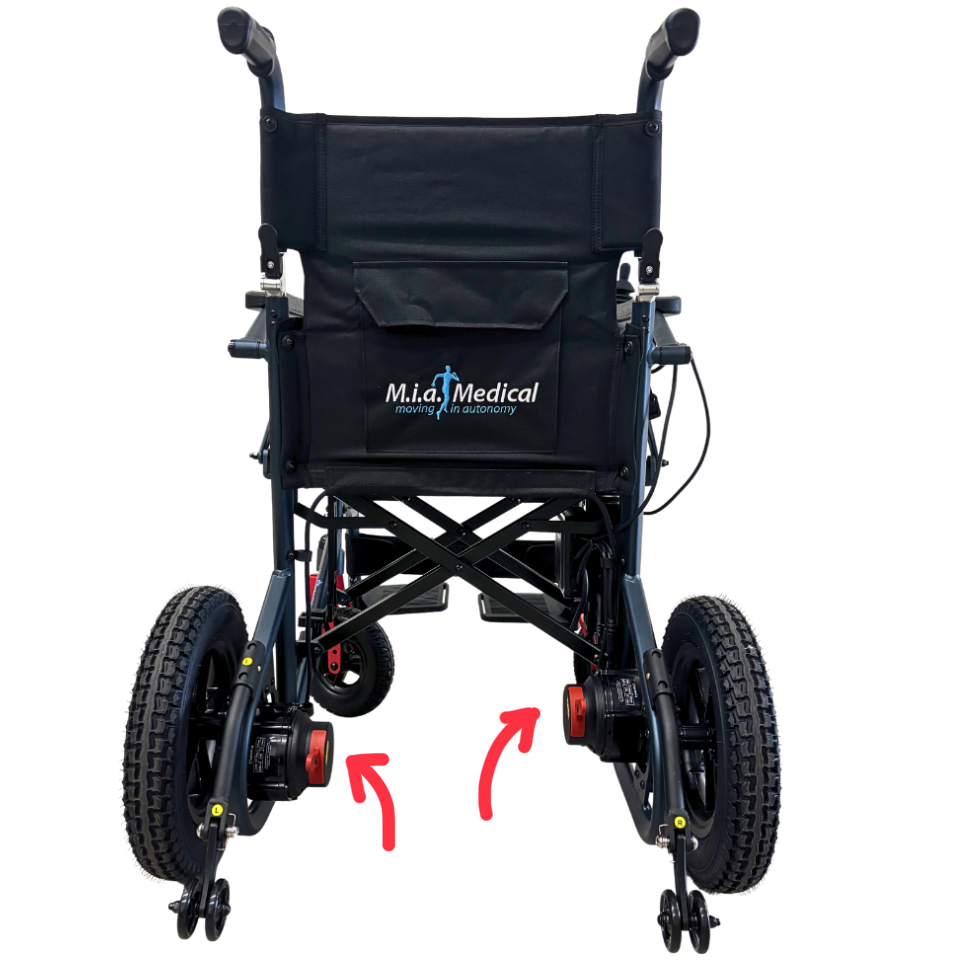
- The error: The manual release levers on the motors are intended solely to allow an assistant to push the wheelchair by hand on perfectly flat surfaces. Deactivating the motors on a ramp or slope means disengaging the electromagnetic brakes, with the risk that the wheelchair will slide away uncontrollably.
- The rule to follow: You must ensure that the levers are in the lock and pull positions (mode “Drive”) before boarding, especially near ramps or changes in level. When the joystick is in the neutral position, the built-in automatic brakes will safely immobilise the vehicle.
Urban Hazards and Driving on Slopes: Mistakes to Avoid When Driving an Electric Wheelchair
4. Cross railway tracks and road gaps diagonally
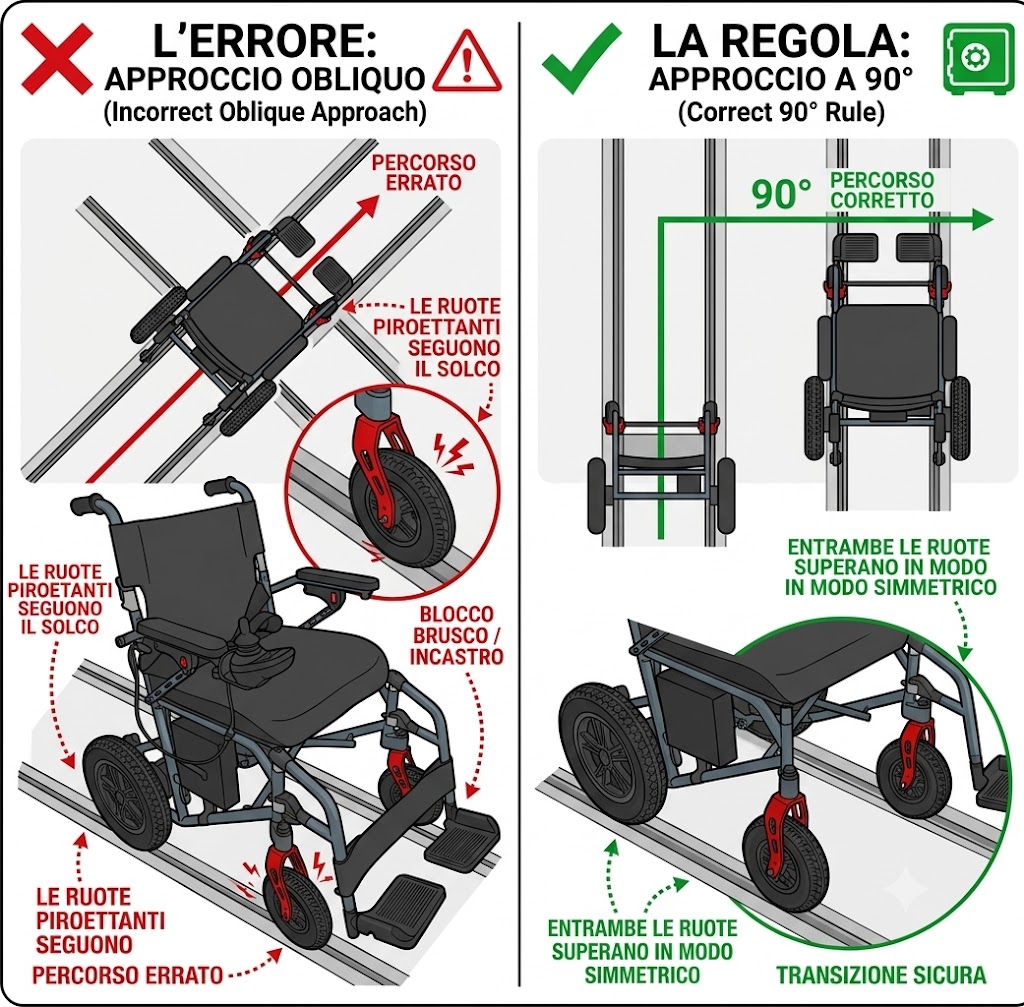
- The error: Approach tram tracks or cracks in the road surface at an angle. Due to their geometric design, swivelling front wheels tend to follow the line of the groove, causing them to get stuck or bringing the vehicle to an abrupt halt.
- The rule to follow: Approaching any urban track or crevice by tackling them with a a 90° angle (perpendicularly). This ensures that both wheels clear the obstacle symmetrically and without veering off course.
5. Underestimating the height of obstacles and road restrictions
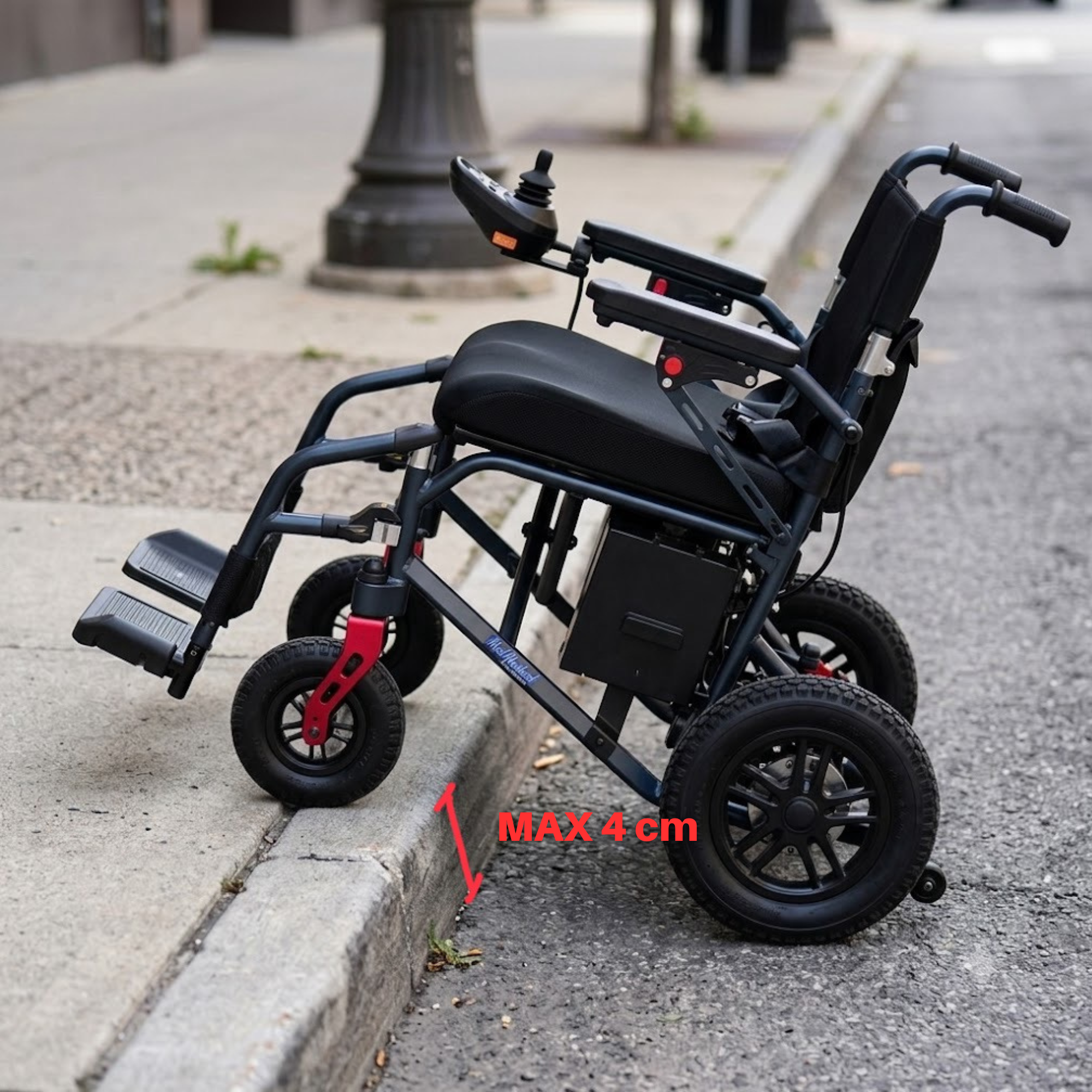
- The error: Attempting to climb steps, kerbs or pavements that are higher than 4 cm, which is the standard limit for most compact and lightweight models. A violent impact may damage the under-chassis electronics or cause the vehicle to tip forwards.
- The rule to follow: Strictly adhere to the 4 cm limit when negotiating obstacles, and reduce your speed when approaching changes in level. If you are tackling complex outdoor routes, the model PassePartout The Mia Medical, thanks to its oversized pneumatic tyres, offers maximum natural shock absorption.
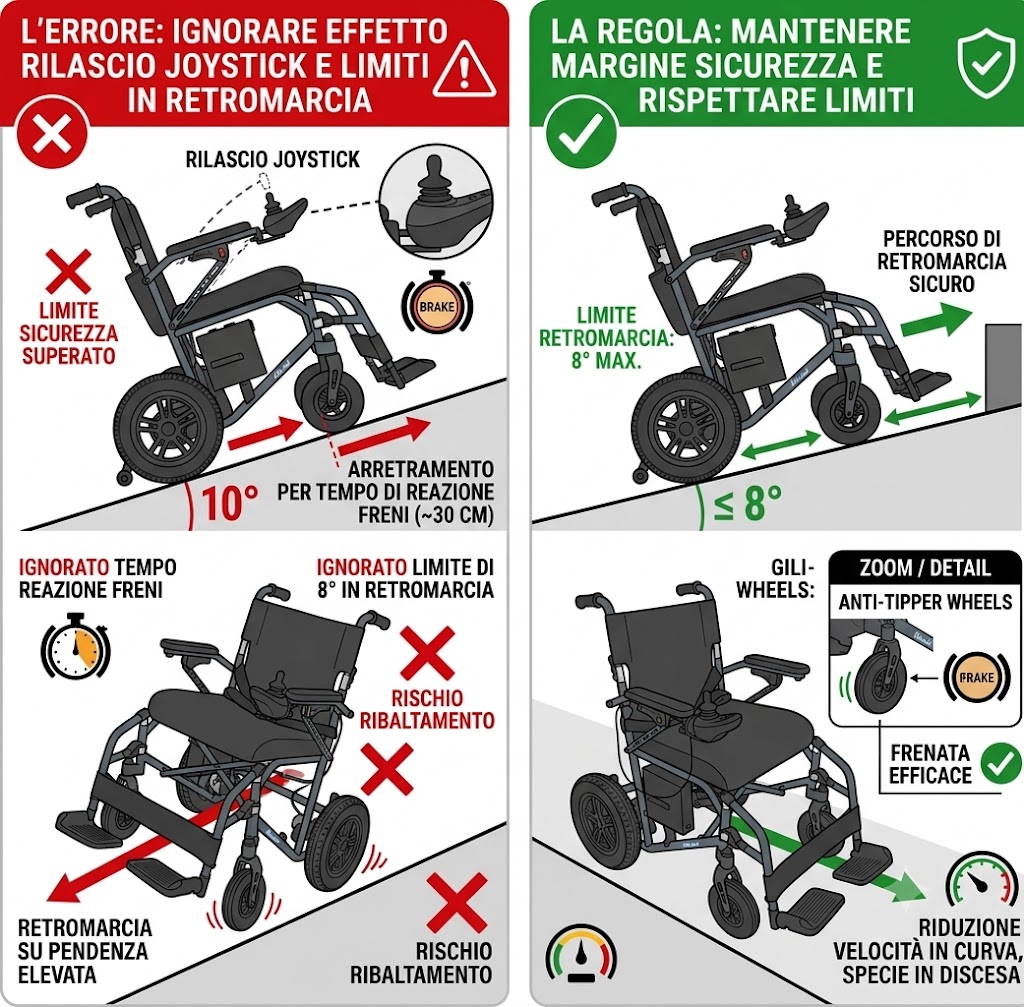
6. Ignore the “Joystick Release” effect and the reverse gradient limits
- The error: Do not rely on the response time of the electromagnetic brakes on a gradient, or reverse on steep inclines. When driving up a ramp and releasing the joystick, the brakes take a fraction of a second to engage, causing a a setback of about 30 centimetres before the total lockdown. Furthermore, whilst up front, premium models such as the Cloud tackle gradients of up to 9°–10°, When reversing, the safety limit is strictly reduced to 8 degrees.
- The rule to follow: Always maintain a safe distance from obstacles behind you when releasing the control whilst driving uphill, and never attempt to reverse on steep gradients to avoid the risk of the vehicle tipping backwards. Always reduce your speed when cornering, especially when going downhill.
Are you looking for a lightweight, foldable electric wheelchair? M.I.A. Medical Italia offers nothing but comfort and safety
Safety starts with choosing the right aid!
Preventing user errors and driving with complete peace of mind is only possible if you have a reliable, certified device that is genuinely suited to your needs. Mia Medical Italy offers a wide range of state-of-the-art electric wheelchairs, available both for hire and for sale, designed to suit every lifestyle: the technology of Starlight with its unique triple control system, the robustness of the PassePartout ideal for uneven urban terrain, the ultra-lightweight Cloud with a pure carbon fibre frame, and the high-performance Superwheel with its upgraded batteries.
To find out which of these solutions is best suited to your needs, we invite you to read our dedicated article: a practical guide to making an informed purchase. If, however, you have any queries or specific requests, please do not hesitate to contact us! Our team of experts will be delighted to assist you through a free, personalised advice to find the perfect model for your everyday life. Please contact us at +39 392 65 09 237 or via Whatsapp.
Errors in the Maintenance and Electronic Management of an Electric Wheelchair

7. Using non-genuine chargers or disconnecting the battery in the wrong order
- The error: Do not use just any standard mains adaptor simply because the plug is compatible, or disconnect the cable whilst the device is still live. This damages the circuits in modern lithium or magnesium batteries and voids the product warranty.
- The rule to follow: Use only the original Mia Medical charger. When disconnecting the device after charging, switch off the mains socket first (or unplug the power lead from the wall socket) and only then remove the plug from the wheelchair’s joystick to prevent arcing.
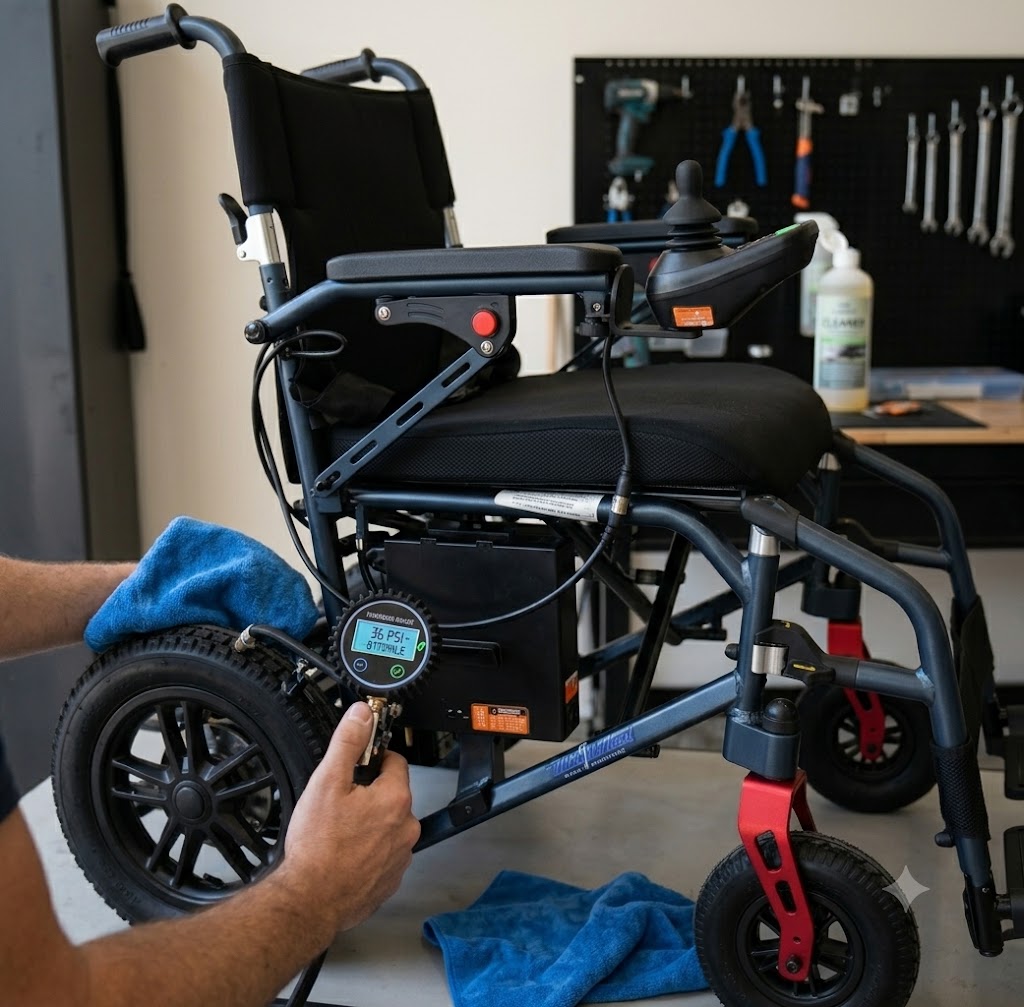
8. Neglecting tyre pressure and storage
- The error: Travelling with flat tyres or leaving your wheelchair unused for months with the battery completely flat. Incorrect tyre pressure compromises handling stability and doubles energy consumption, whilst deep discharge irreversibly damages the lithium cells.
- The rule to follow: For models with pneumatic tyres, such as the PassePartout, maintain the constant pressure at 36 PSI to ensure maximum stability and grip. If the wheelchair is not used for long periods, you should still carry out a full recharge at least once a month.
9. Exposure to excessive moisture and incorrect washing
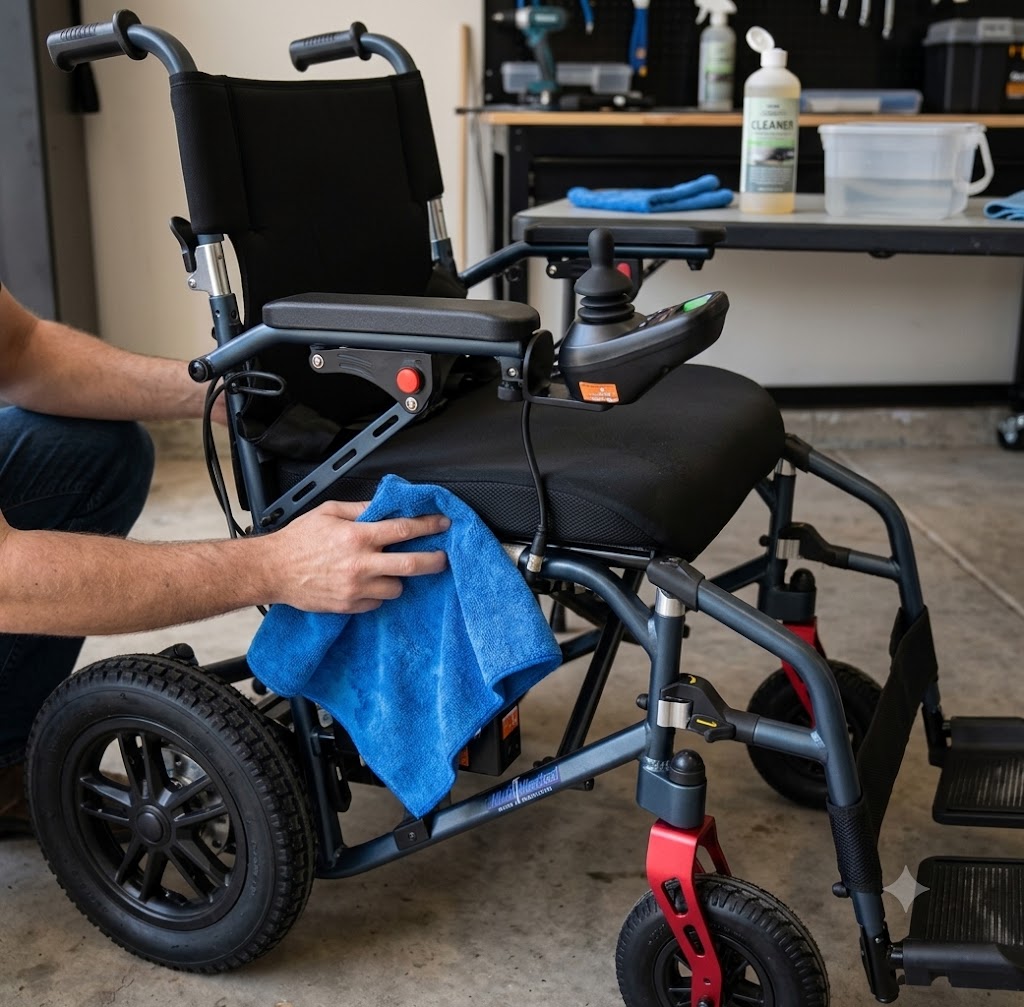
- The error: To think that resistance to light splashes of water (IP24 certification found on models such as the Cloud) allows you to drive in a heavy downpour or to wash your wheelchair with a direct jet of water.
- The rule to follow: Avoid very damp environments. When cleaning, use only a soft, slightly damp cloth, taking great care to ensure that no liquid gets under the joystick control unit or into the connectors located under the seat.
10. Hanging loads from the joystick or carrying passengers
- The error: Do not use the control lever as a hook for bags or shopping bags. An accidental movement of the load may displace the joystick, causing the motors to start unexpectedly. It is equally dangerous to carry passengers (e.g. small children) or to tow other manual aids, as this overloads the motors.
- The rule to follow: The electric wheelchair is a single-seater medical device. For personal belongings, use only designated accessories, such as the ergonomic back pack supplied as standard using the model PassePartout.
The Importance of the Home Environment: Adapting Your Home for Driving
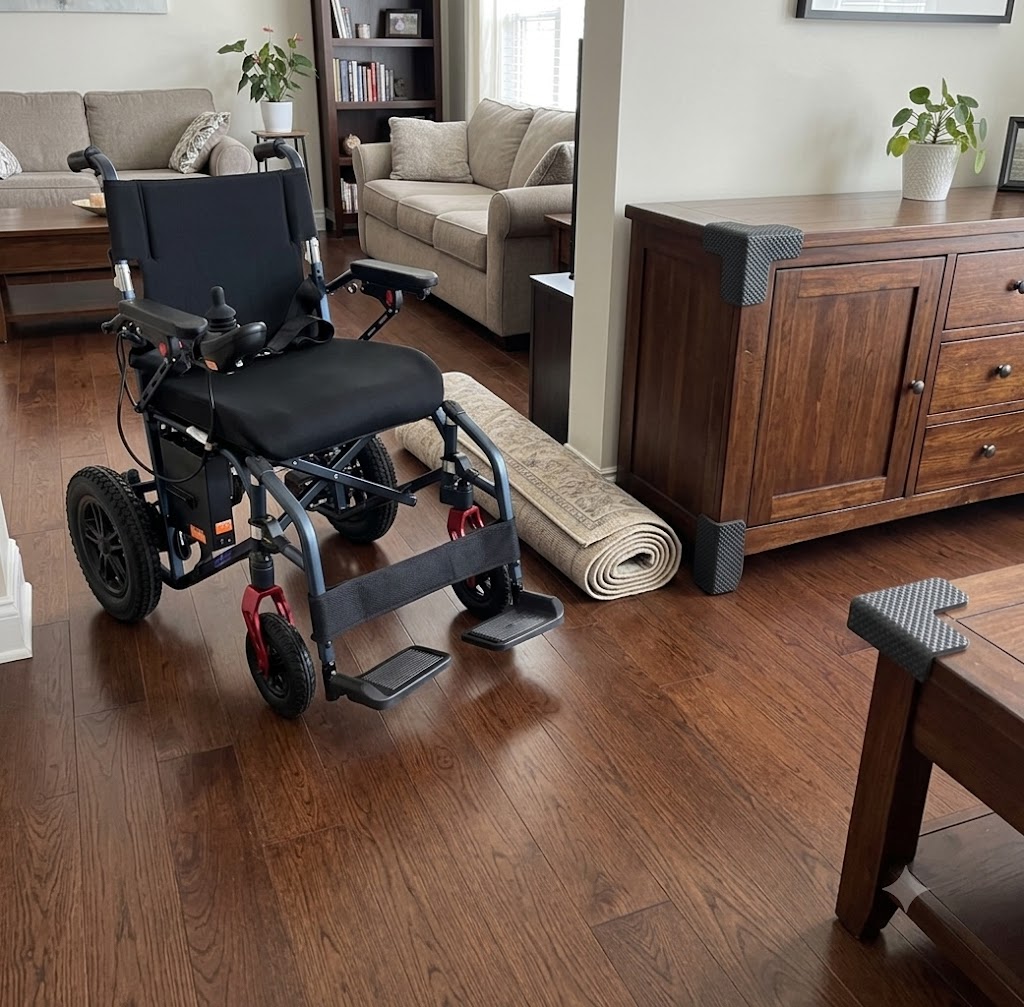
Often, if a user keeps bumping into walls or furniture, the problem does not lie with their driving ability or the responsiveness of the wheelchair, but with the layout of the interior spaces. Making adjustments to the home environment is essential for improving safety and maintaining independence:
- Remove the carpets: They are the main cause of the swivelling front wheels seizing up or slipping.
- Fit rubber corner protectors: They protect the sharp corners of the furniture and the frame of the pram from minor knocks when manoeuvring in tight spaces.
- Optimising trajectories: Reorganise the layout of the furniture to create wider, straighter passageways. Bear in mind that models such as the Cloud They offer an extremely small turning circle (≤ 120 cm), making them ideal for turning on the spot in confined domestic spaces.
Choose the Perfect Formula for Your Freedom!
Avoiding these minor mistakes means ensuring that you a safe, comfortable and barrier-free travel experience. Understanding your mobility aid is the first step towards rediscovering the joy of independence, both at home and outdoors.
Buy or Rent? Choose maximum flexibility with Mia Medical
Every mobility or rehabilitation programme is unique. That is why, on our website, you will find not only the best technological models in for sale, but also a a comprehensive and flexible hire service, ideal for temporary needs, post-operative recovery, holidays or simply to try out the product in real-life conditions before making a final purchase.
Would you like to find out about our prices, compare the technical specifications or discover our full range of assistive devices in our catalogue?
Visit the official website of Mia Medical Italia to explore our rental and purchase options, or contact Contact our specialists straight away for a free telephone advice. Take back control of your time and your movements!
 Italiano
  English (UK)
  Français
  Español
  Português
  简体中文
简体中文